Is the flying Tesla Roadster video real? Event footage vs AI clips
 Roadster AI Video Team
Tesla showed a ramp jump and an airborne flip on 15 October 2026. Many viral Roadster clips are AI. How to tell them apart, and why the distinction matters.
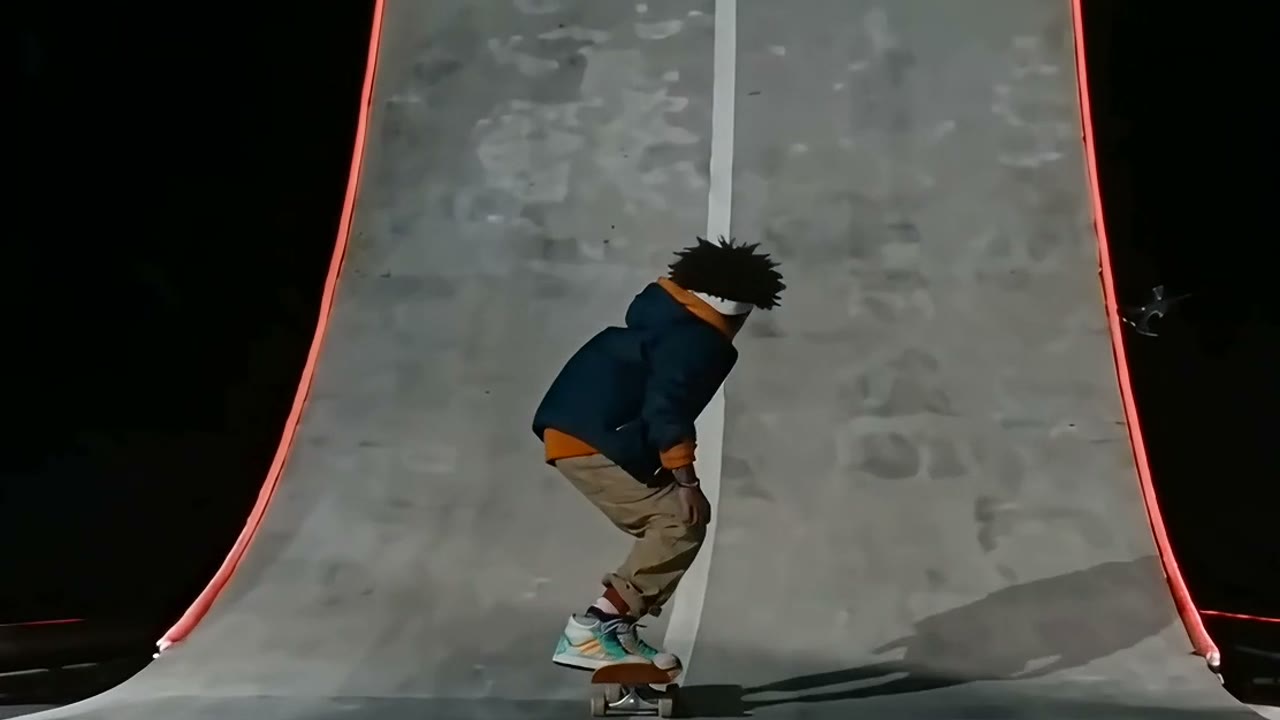
Short answer: both are circulating. Tesla's 15 October 2026 livestream included a real ramp demonstration and an airborne flip performed with the new Roadster prototype. Separately, thousands of AI-generated clips borrowed the same visual language and put other cars — or the Roadster itself — into scenes that never happened. "Is it real?" is therefore not one question. It depends which clip you are looking at.
This page separates the event from the fan edits, gives you a practical checklist for telling them apart, and explains why this site labels every render as fiction.
What Tesla actually showed
The livestream introduced three Roadster variants and a demonstration that included a ramp climb, a brief airborne phase and a landing. Tesla's own footage is the primary source. Reports from the event describe a staged demonstration on a closed course, not a public-road stunt.
Two details matter for the clips you see afterwards:
- The demonstration was staged. A closed course, a prepared ramp, a camera crew. It was not a car spontaneously flying over traffic.
- The car was a prototype. The event did not mean that customer cars can fly, or that the feature is shipping.
Anything that shows a Roadster lifting over a real traffic jam, landing on the moon, or escaping a police roadblock is therefore not event footage. It may still be a good AI clip. It is not a recording of the event.
Why the AI clips spread
The visual language is simple and repeatable: a low ramp, a car hanging upside down for a beat, cold-gas thrusters, a smoky landing. That is exactly the kind of scene a video model can approximate from one photo. Creators discovered that a photo of their own hatchback, dropped into the same prompt, produces a funnier clip than a perfect Roadster replica. The mismatch is the joke.
Social platforms rewarded the format because it is legible in the first second: a car, in the air, somewhere it should not be. The comment section did the rest. "Is this real?" is engagement, and engagement is distribution.
A practical checklist
No single tell proves a clip is AI. Use several together.
| Signal | What it looks like | How strong it is | | ------------------ | -------------------------------------------------------- | ---------------- | | Impossible physics | A car changes direction mid-air with no thrust | Strong | | Wheel geometry | Five wheels, floating wheels, wheels that change size | Strong | | Badge and plate | Text that shifts between frames or looks painted on | Strong | | Crowd behaviour | Background people who do not react to a flying car | Medium | | Camera continuity | A cut that teleports the car between angles | Medium | | Source account | A creator who posts AI clips daily, no event credentials | Medium | | Lighting | Reflections that do not match the sky | Medium | | Compression | Uniform softness across the whole frame | Weak |
The strongest signal is usually the source. Event footage comes from Tesla, a news organisation, or a person who was physically present and can show other angles. An account that posts a new impossible stunt every day is an AI account, even if one clip happens to look convincing.
Why the distinction matters
Presenting an AI clip as real footage is not a victimless joke. It can move markets, harass a named person, or turn a public road into a place where drivers believe a car can fly. Platforms increasingly require synthetic media to be labelled. In some jurisdictions, publishing a realistic fake of a real event without disclosure is a legal problem, not just a social one.
Our position is simple: the tool on this site is for fictional scenes. Every render is labelled as AI-generated in the studio, the terms require you to disclose it when you post, and the prompts explicitly ask for a fictional scene. We do not reproduce Tesla footage, and we are not affiliated with Tesla or SpaceX.
How to make your own clearly fictional clip
If you want to join the trend without adding to the confusion, make the fiction obvious:
- Put the car somewhere impossible: the moon, a rooftop, a desert with two suns.
- Use a vehicle that is clearly not a Roadster: a hatchback, a van, a bicycle.
- Add a caption that says "AI" before you post.
- Avoid real news branding, police insignia and identifiable public figures.
The studio is below. Upload a photo, pick a scene, and keep the result clearly on the fiction side.
This clip: 35 credits · 10 clips a month for $39.90 (Pro), or 102 a year for $319
What the trend says about AI video
The Roadster moment is a useful case study because it combines a real event, a simple visual hook and a model capability that is good enough to fool a casual viewer in a vertical feed. The lesson is not that AI video is indistinguishable from reality. It is that context — who posted it, what else they post, whether the physics hold up — matters more than any single frame.
That is also why this site puts the reference label on every sample clip and why the studio asks you to confirm you have permission to use the photo. The technology is fun. The label is what keeps it fun.
Frequently asked
Did Tesla's Roadster actually fly? Tesla demonstrated a ramp jump and an airborne phase on a closed course. It did not demonstrate a customer car flying over public traffic.
Are the viral traffic-jam clips real? Most are AI-generated. They use the event's visual language but place the car in scenes that were not part of the demonstration.
Can I make a clip that looks like the event? You can make a fictional stunt clip from your own photo. Do not present it as event footage, and label it as AI when you post.
Is this site affiliated with Tesla? No. It is an independent creative tool.